CALL US FREE ESTIMATE
CALL US FREE ESTIMATE
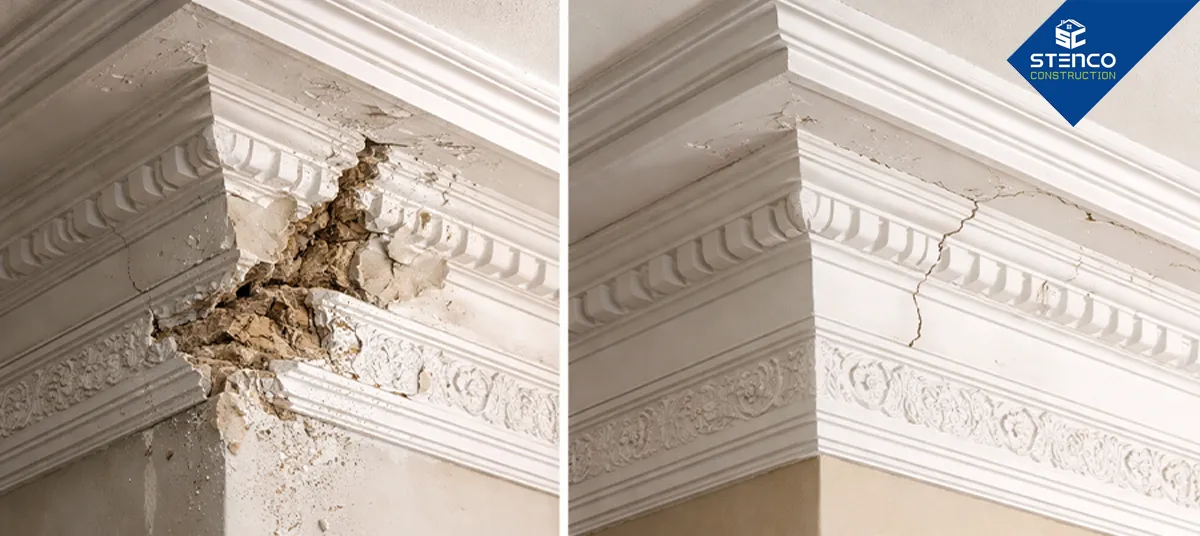
Cornices are a significant architectural element located at the uppermost part of the buildings at the junction of the roof and wall. However, In home renovation they not only enhance the aesthetic value, but also help to keep the structure safe against water and other environmental damages. Cornice damage may, however, develop over time and this is as a result of a number of factors. To make appropriate decisions when it comes to repairing structural cornice, it is essential to have an understanding of the distinction between structural and cosmetic problems.
Any type of deterioration, cracking or weakening of the cornice structure is known as cornice damage. This damage can affect the aesthetic quality as well as the stability of a building. It begins as a minor problem and in most instances may be left to escalate into a serious problem.
Cornice damage has a number of typical causes. One of the main reasons is moisture intrusion because water can penetrate the material and degrade it as time goes on. Exposure to weather is also a significant factor, particularly in places that experience a lot of rain fall, extreme heat or freezes. Older cornices are also more susceptible to cracks and rot because of aging materials that become less strong with age. Moreover, the movement due to the foundation shifts or settling may introduce stress into the cornice that can cause the apparent damage. Understanding of these reasons will assist the owners of the property to identify preventative measures and early signs before the destruction is too serious.
Not all cornice damage is the same. Certain problems may affect only the aesthetics, whereas some problems may compromise the safety of the whole building. It is important to know that there is a difference between structural and cosmetic damage.
Structural cornice damage affects the stability and strength of the building. It may pose safety hazards and normally necessitates urgent repair. Conversely, cosmetic damage only goes to the surface and is mostly relative to the appearance of the cornice. Although cosmetic problems might not be as severe, they cannot be overlooked.
Structural damage is more severe as far as safety is concerned since it may result in falling debris or additional structural issues. Cosmetic damage is not a serious hazard but may increase with time. In terms of urgency in repairs, structural ones should be addressed by professional contractors in Manhattan as soon as possible, and cosmetic ones can be addressed by simple repairs. Another contrast is cost, which is more costly to repair the structure because it is complicated whereas cosmetic repairs are cheaper.
Structural cornice damage can affect the core strength and stability of the cornice and may also produce damage to the surrounding structure. This type of damage is more severe as it may affect the safety of the building and people surrounding it.
Structural damage can be caused by several factors. A significant cause is foundation movement, which may cause stress to the cornice because it is moving or settling. Another typical cause is water damage; this occurs when water gets into the structure and corrodes the material internally. The cornice may also be stressed by load on the roof or the other upper parts of the building and crack or detach with time.
It is important to know the indicators of structural cornice damage. Expanding cracks growing with time are one of the most frequent signs. The cracks can tend to be signs of structural problems as opposed to being surface problems. Separation between the walls is another warning signal where the cornice starts to be pulled away from the building.
A serious indicator is also the soft or crumbling material, which indicates that the internal structure is becoming weaker. The presence of water stains around the cornice is an indication of a constant problem with moisture that may result in additional damages. In case any of these signs are noticed, then it is important to get professional inspection.
Cosmetic cornice damage are superficial problems that are seen to affect the looks of the cornice and have no effect on the structural integrity. This form of damage is not serious and easy to fix.
Cosmetic cornice damage can be as a result of natural aging, light exposure to the environment or aged wear and tear. Although it is not a direct safety issue, it may decrease the facade of a building and can cause even greater issues unless addressed.
Cosmetic damage is indicated by a number of signs. Hairline cracks are extremely widespread and in most cases, they do not influence the structural strength. Another common symptom is peeling or fading paint, usually due to weathering or aging of materials.
Cosmetic damage also includes surface blemishes (uneven surfaces, minor dents). The first one is that there is no flow and division in the cornice. The damage is likely to be cosmetic in case the structure is intact and stable.
Though cosmetic damage might not appear damaging initially, it can also escalate to structural damage when it is disregarded over an extended period of time. Even tiny cracks or scratches in the paint can result in the moisture getting into the material. This water may make the structure weak with time and cause more severe issues.
To illustrate, consider a building that has little cracks in the cornice. Originally these cracks do not harm anything but make it look. But rainwater starts seeping in them. The cracks continue to increase in size as the water pours and expands whenever the temperatures change. The material then eventually begins to wear down and the cornice can start to loosen off the wall. What began as a cosmetic problem has now turned into structural cornice damage. This is the reason why any slight damage must be solved at an early stage to avoid expensive repairs in future.
Identifying damage early also helps prevent escalation. Small cracks or surface issues can be repaired quickly before they spread and cause more extensive damage. Regular inspection and timely action are key to maintaining the condition of the cornice. Early detection of the cornice damage can save time, money and effort. Ignorance is a problem with many property owners, who believe that minor problems are not serious. But this may cause greater problems in later life.
Cost savings is one of the key advantages of early detection. Minor damage is far less expensive to fix compared to structural problems. Another important factor is safety. Structural damage may be dangerous to occupants and pedestrians particularly when sections of the cornice are loose.
Early detection of damage also aids in the prevention of escalation. Little cracks or cosmetic problems can be easily fixed before they become widespread and inflict greater harm. Frequent inspection and prompt action are the major factors that ensure that the cornice is in good condition.
Cornice inspection may not require sophisticated equipment. Simple visual inspection is capable of detecting the initial signs of issues. Begin by measuring the size of any cracks. Small cracks are usually cosmetic and large or increasing cracks could be structural.
Second, find any movement or separation. When the cornice seems to be losing contact with the wall, then this is indicative of severe damage. Stains, damp spots or mold are also moisture signs to be checked, as they are indicators of water intrusion.
Lastly, determine the surface stability. The material can be pressed gently to ascertain whether it is solid or soft. A flat surface usually indicates cosmetic damage whereas a tender or fractious surface implies structural issues. One thing about this is that it is always advisable to seek professional advice.
Repairing structural cornice damage needs proper planning and skills. The main aim is to regain the strength and stability of the structure.
The reinforcement may take the initial step whereby the framework is made stronger to bear the cornice. In other instances, injured parts must be replaced completely, particularly where they are severely weakened. Structural fixes can also entail correction of underlying problems like water leaks or foundation movement.
These repairs are more intricate and involve specialized tools and materials. Proper Cornice repairing will make sure that the cornice will be safe and long-term.
Cosmetic cornice damage is simple and cheaper to repair. It is aimed at enhancing the look and avoiding further decline.
Crack filling is a common technique of fixing small cracks on the surface. This aids in repairing a smooth surface and avoids water from getting in. Another step that should be considered is painting because it will safeguard the surface and improve the overall appearance of the cornice.
Surface repair can also include the repair of small bumps and the evenness of surfaces. Although these repairs are easier, proper execution of the repair should be observed to yield long term results.
It is always advisable to prevent the cornices as opposed to repairing them. It is important in maintaining the structure in good conditions by carrying out constant maintenance.
Frequent check-up is used to diagnose the issues before they get serious. It is also important to fix the leaks immediately since water is one of the primary sources of damages. The quality of materials used in repairing the damaged parts makes them durable and helps to mitigate problems in future. These preventive measures will increase the life of the cornice and save the overall cost of its maintenance.
Every property owner should have knowledge on the distinction between structural and cosmetic damage in cornices. Structural damage impacts safety and must be addressed immediately, whereas cosmetic damage primarily impacts the appearance but still should not be overlooked.
You can also save the day and unnecessary costs by determining the nature of damage at the earliest stage. Frequent examination, timely repair and maintenance will assist in maintaining your cornice in good condition and guard your building in the years to come.
Protect your property before minor cornice damage turns into a costly structural problem. Trust Stenco Construction for expert inspection and long-lasting repairs. Contact us today to schedule your consultation and keep your building safe and secure.
How do I know if cornice damage is structural?
The structural damage is usually associated with massive cracks, disconnection with the wall, or tender material. In the event that the damage appears to be deteriorating, then it is likely structural.
Are small cracks in cornices serious?
Small cracks are typically cosmetic, but they need to be repaired to avoid letting moisture in and creating additional damage.
Can cosmetic cornice damage become structural?
Yes, with no treatment, cosmetic damages may deteriorate with time and become structural problems because of moisture exposure and environmental factors.
How often should I inspect my cornice?
Cornices should be checked at least once a year or after extreme weather conditions.
Is it better to repair or replace a damaged cornice?
It will rely on the severity of the damage. The small problems may be fixed and the major structural damage might need replacement.




No matter what type of project you have, we can help