CALL US FREE ESTIMATE
CALL US FREE ESTIMATE
Introduction
Custom Built Home
Prefabricated Home
Key Differences Of Custom vs Prefabricated Home
Financial Viability: Custom vs. Modular Housing Analysis
Are Prefabricated Homes as Durable as Custom Built Homes?
Custom Home or Prefab Home: Which Offers Better Resale Value?
Which Home Option Is Better for Modern Living?
Is a Custom Built Home Worth the Investment?
When Is a Prefabricated Home the Right Choice?
Frequently Ask Questions
Final Thoughts
The issue of whether to use a custom built house or a prefabricated house is one of the most crucial decisions for a modern home buyer. Both have their own advantages in form of benefits, cost and lifestyle. As the cost of construction increases, and housing needs grow, most individuals desire to know which one best suits their budget, schedule and the long-term objectives.
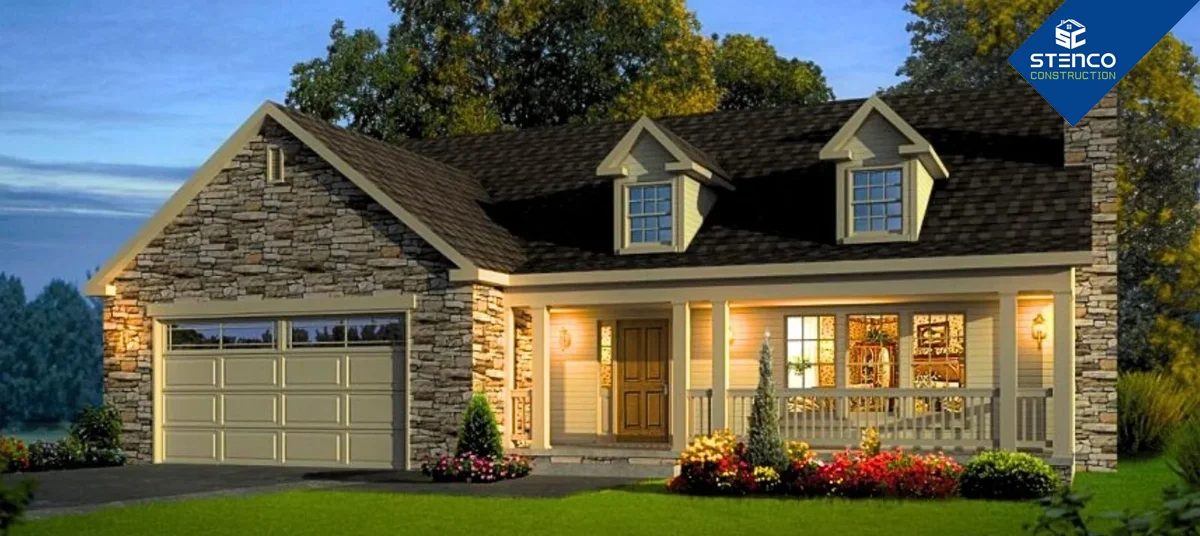
A custom made house is made and built starting at the ground level depending on the preferences of the homeowner. All details such as layouts, materials are selected to suit individual taste and lifestyle requirements. This is the best choice that should be offered to individuals who wish to have complete control over their home and have no problem investing their time and money into a customized home.
This process is started by choosing land, employing an architect, and collaborating with a builder to come up with the home design. The construction is built in situ, using approved plans and local building codes. Homeowners remain engaged during the project, and they make decisions in every stage. This permits flexibility, though it involves the need to be patient and to think through the plan.
A custom built home has special architectural design, personalized room designs and custom finishes. Premium materials, efficient energy systems, and modern technologies can be selected by the homeowners. The product is a unique home that indicates personal taste and convenience.
Its key strength is utter customization and high workmanship. Custom homes however tend to be more expensive and require more time to be completed than the prefab homes. There are also possibilities of unexpected delays and budget overrun, particularly when changes in the design are encountered during building.
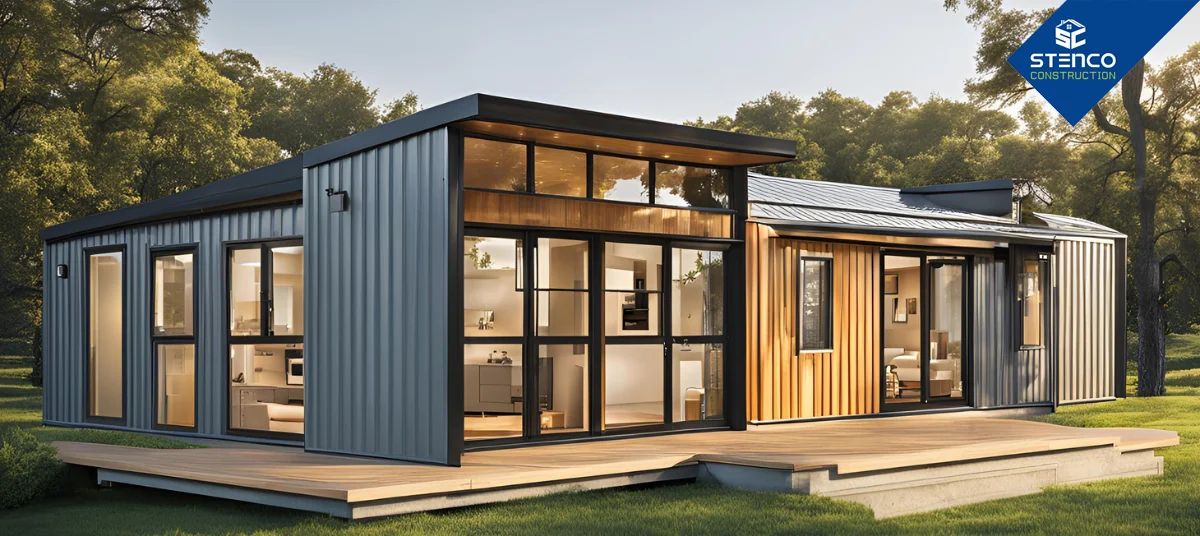
A prefabricated home is constructed in parts in a factory afterwards it is carried to the location where it is assembled. Such an approach is aimed at efficiency, cost-effectiveness, and shorter construction schedules. Prefab houses have gained popularity because of better design choice and current building standards.
The majority of the manufacturing occurs in a regulated factory setting. When the parts are made, they are transported to the location and put together on an existing base. This minimizes wastages of time caused by weather and uniformity in quality of production.
Modular houses are constructed in large components and erected at the location. Panelized houses involve wall panels that are assembled at the site in a flat fashion. Manufactured homes are complete structures that are assembled in the factories and assembled on permanent or semi-permanent foundations. The different types adhere to varying construction laws and zoning laws.
Prefab homes are cheaper and quick to build than custom built homes. They also minimize waste of materials. The customization can be minimal though, and some purchasers still view prefab homes as inferior quality though this is a perception that is gradually fading.
Learning the key distinctions between a custom built home and a prefabricated home can guide the buyer in making the correct decision based on his work, budget, and possible plans. Both alternatives offer comfortable living conditions, but with a lot of difference in terms of flexibility, cost and even methods of construction.
Personalized houses provide the option of making infinite designs where an owner can make alterations at any point in terms of the layout and features. Prefabricated houses have standardized designs with few possibilities of customization, but modern prefab constructors have greater options than in the past
Prefab homes take a lot less time to be completed which in many instances is a few months. Tailor made houses may require up to a year based on the design clearance, climatic conditions and construction issues on the ground.
Prefab homes are also relatively cheaper since labor and material wastage is minimized in the factory construction. Custom built houses are more expensive because of the nature of the work being done on site, design costs and high quality material selection.
The high-end materials are usually used in custom homes which are selected by the owner. Prefabricated houses utilize standard materials that are of quality standard but do not necessarily have luxury interiors.
Both of these are potentially energy efficient, although prefab homes frequently have modern insulation and energy saving systems as standard. With an increase in cost, custom homes can be more efficient, provided they are designed with effort.
Custom homes can maintain a lower maintenance cost at the beginning because of high quality material. Prefab homes are not fragile only they require additional maintenance depending on the type of construction and the nature of exposure to the environment.

Cost is also a significant consideration in comparing the custom built homes and the prefabricated homes. The buyers must not entirely look at the initial cost but also the financial obligations and savings in the long term.
Prefab houses tend to be cheaper in their upfront price since the cost of overheads is minimized by the factory production. Individual homes also entail an increased initial expenditure as a result of architectural designs and construction on the ground.
Personalized houses are highly dependent on labor force that raises costs. Modular houses enjoy the economy of bulk purchases of material and simplification of labor.
The cost of custom homes can be more valuable in the long-term provided that it is built using long lasting materials. Prefab homes will save money by reducing utility bills and time taken to occupy them.
Homebuyers also have a general concern as to durability of prefab homes. Current prefabricated building has developed a lot and currently complies with tough quality standards.
Prefab homes should not be exempt of the local building codes like custom built homes. In this case, modular homes are especially subject to strict control during the factory production.
Components assembled in the factories are prepared to endure the transportation stresses and have a structural strength. City homes are dependent on the quality of on site construction and this may be erratic.
When properly maintained both types of homes can last several decades. The lifespan relies rather on materials and care in comparison to the way it is built.
Homeowners should always consider the resale value as a factor before deciding to invest. Perception of the market is a major factor in property value determination.
The custom built homes are regarded as high quality houses. Custom design and expensive finishes would be able to appeal to buyers who are ready to pay higher prices.
Prefab homes can be slightly cheaper to sell as there are still misconceptions left. Nevertheless, the new prefab construction has been enhancing consumer trust.
The place, up-keep, energy-saving, and general design have a larger effect on resale than the custom or prefabricated home.
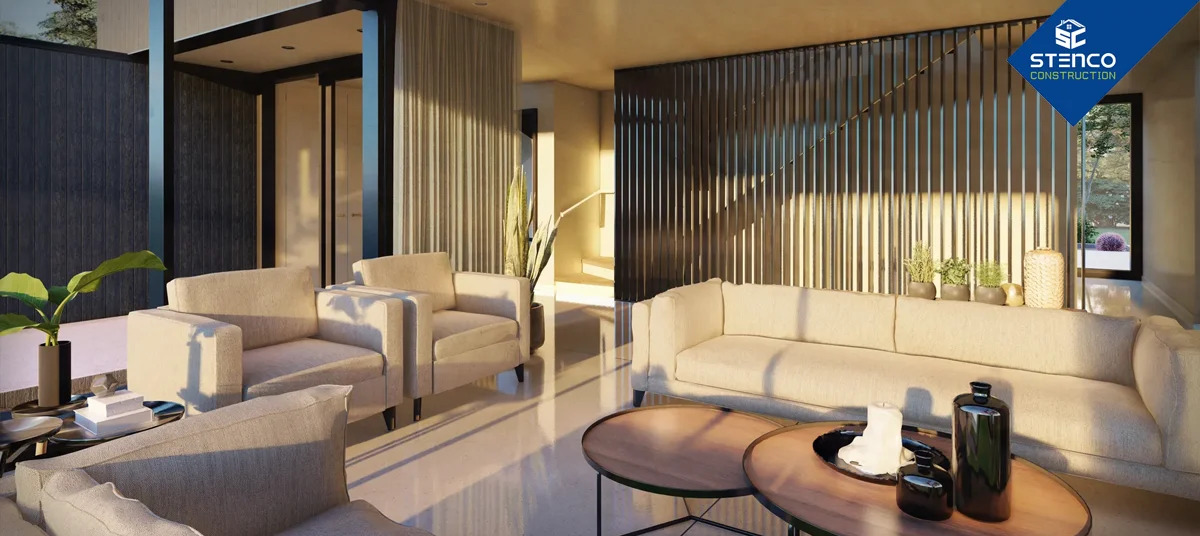
The contemporary lifestyle requires intelligent technologies, sustainability, and adaptable areas. These needs can be satisfied by both types of homes, provided that planning is conducted.
Smart technologies can be easily incorporated in custom home. Ready-built houses are also pre-equipped with smart solutions.
Prefab homes are usually fitted with green materials and energy-efficient mechanisms. The same can be accomplished with customized green designs with custom homes.
Personalized homes suit the needs of a family that has certain lifestyle needs. Prefab homes are appropriate to people who are interested in efficient functional living.
A custom built house is a long term investment that comes with a sense of personalization and emotional fulfilment. But it is not the correct option for all people.
Custom homes are most beneficial to buyers who are creative, flexible, and will remain long-term.
Custom homes are best suited in case of constructions on land that is unusual or in case of certain architectural requirements.
Prefab houses provide convenient solutions to contemporary housing problems. They particularly are attractive to efficiency-oriented buyers.
Prefab houses are suitable in fast housing requirements, isolated places and low-cost projects.
Prefab homes are not only cheap and fast but are also frequently enjoyed by first-time buyers, retired people, and investors.
1. Are prefabricated homes cheaper than custom homes?
Yes, prefab homes are generally more affordable due to reduced labor and construction time.
2. Can prefabricated homes be customized?
Prefab homes allow limited customization, mainly in finishes and layouts, depending on the builder.
3. Do prefab homes meet local building codes?
Yes, prefabricated homes must comply with all local and state building regulations.
4. Which option is better for first-time home buyers?
Prefab homes are often better for first-time buyers due to lower costs and quicker move-in timelines.
Both custom built homes and prefabricated homes offer valuable benefits. A custom home is ideal for those seeking personalization and long-term value, while a prefabricated home suits buyers prioritizing affordability and speed. Understanding your budget, lifestyle needs, and future plans will help you choose the home option that truly fits your vision.
Contact us at Stenco construction and consult with our experienced contractors who can guide you through the process and help you to make an informed decision that fits both your current needs and your future aspirations.




No matter what type of project you have, we can help